
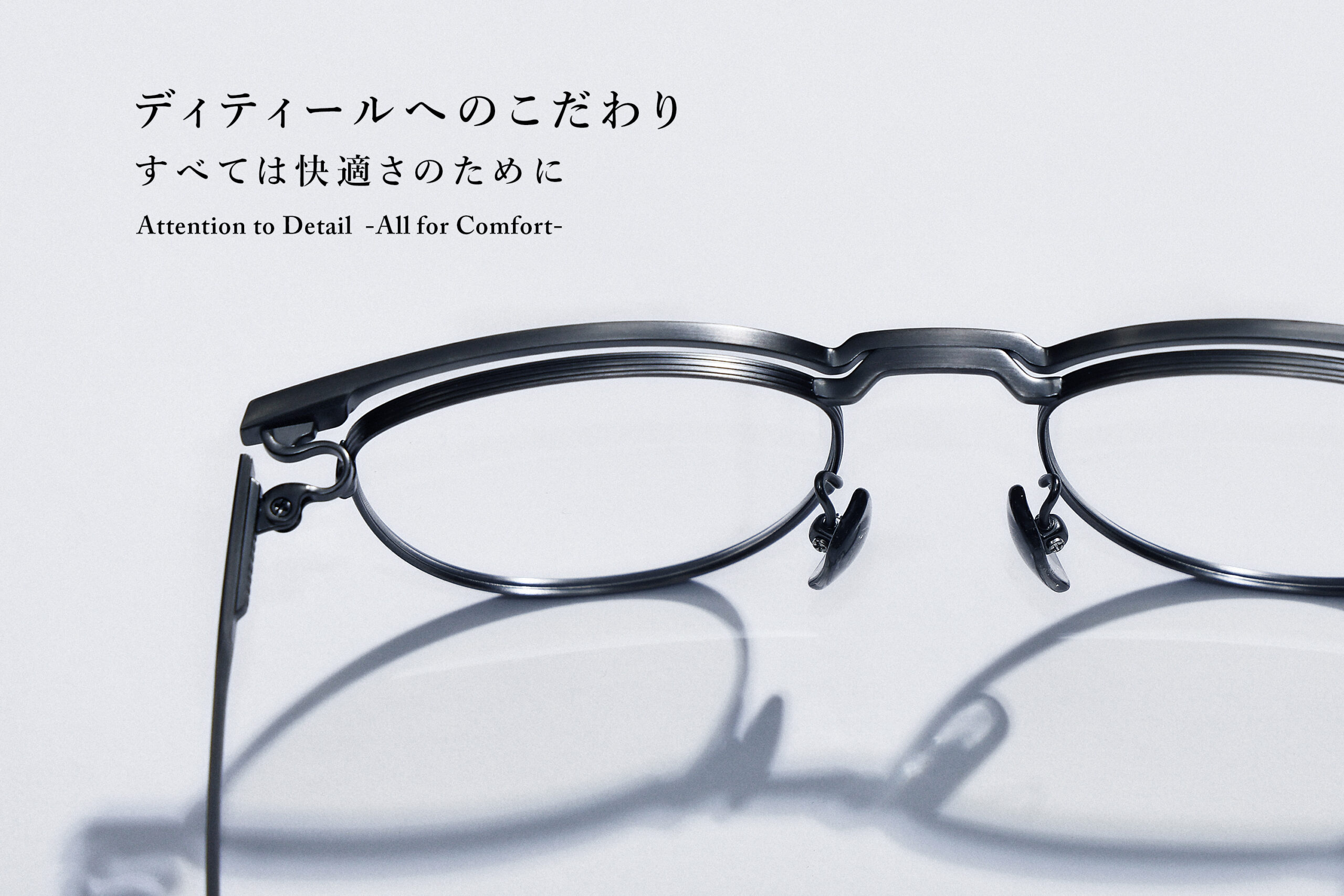
Thirty years since the birth of Four Nines brand, the pursuit of the “highest purity” extends to every individual component that makes up a frame.
Flexible parts, nose pads, pad arms, and temple tips. These small components are essential elements that ultimately determine comfort when worn. Four Nines carefully examines each of these details, continuously refining them and repeatedly selecting the optimal solution for every frame. This is because true comfort in eyewear is not achieved by individual parts alone, but by the balance of the frame as a whole.
The Concept Behind Flexible Parts — Diverse Approaches
Four Nines incorporates flexible functional components into the structure of its frames to be comfortable, durable, and easy to adjust. These key parts relieve stress and create overall frame stability, and they are not limited to the Gyaku-R Hinge alone. There are other components that fulfill the same role, yet take on entirely different forms. For example, temples featuring a flexible, folded structure absorb stress within the elastic temple. The S-Shape Parts and U-Shape Parts developed exclusively for ladies’ frames offer not only functional benefits, but also a decorative element.
When Four Nines plans a new frame, the first considerations are fit, durability, and range of adjustment. The starting point is always the question: where, and in what form, should flexible functionality be incorporated?
Layered Brow Structure
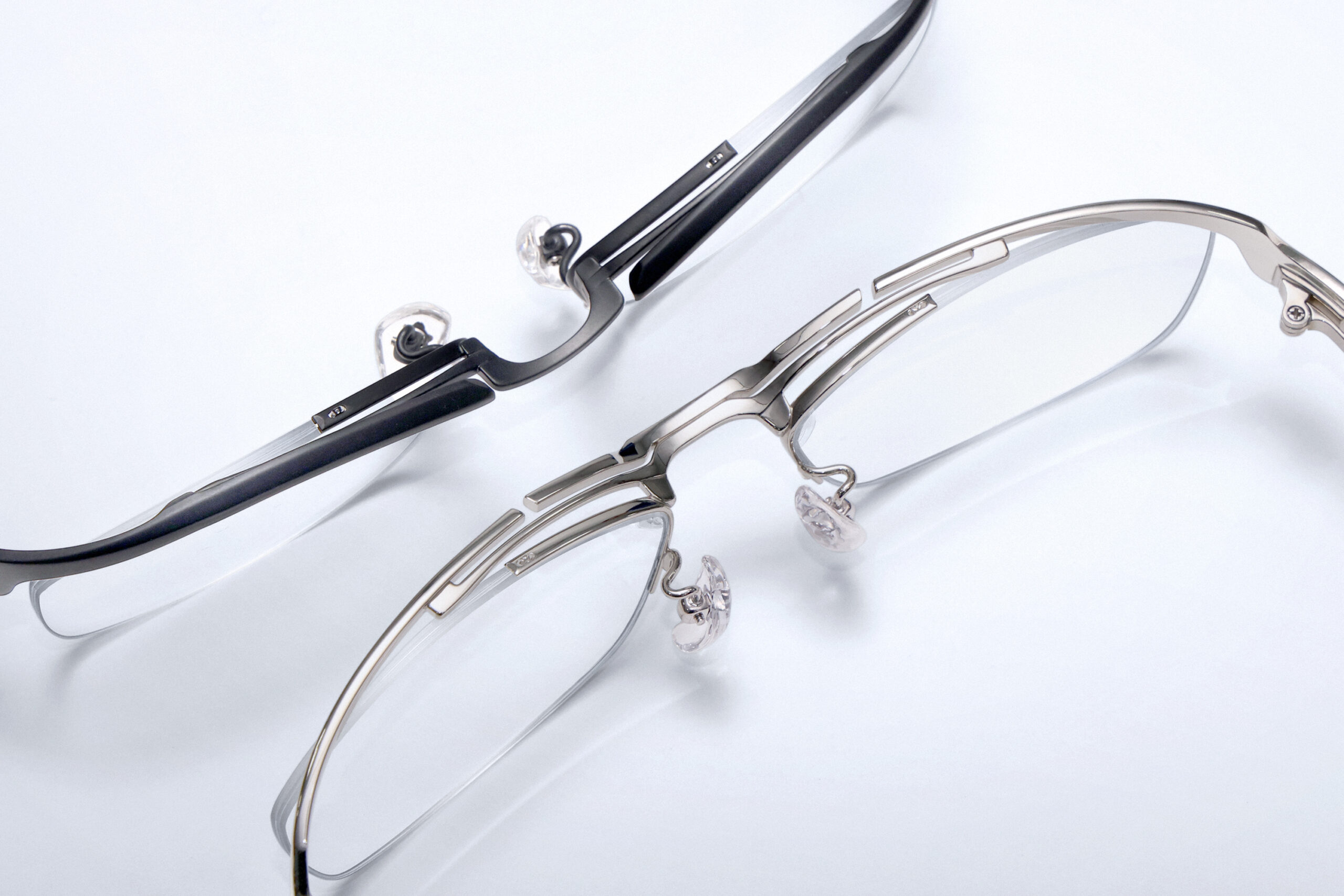
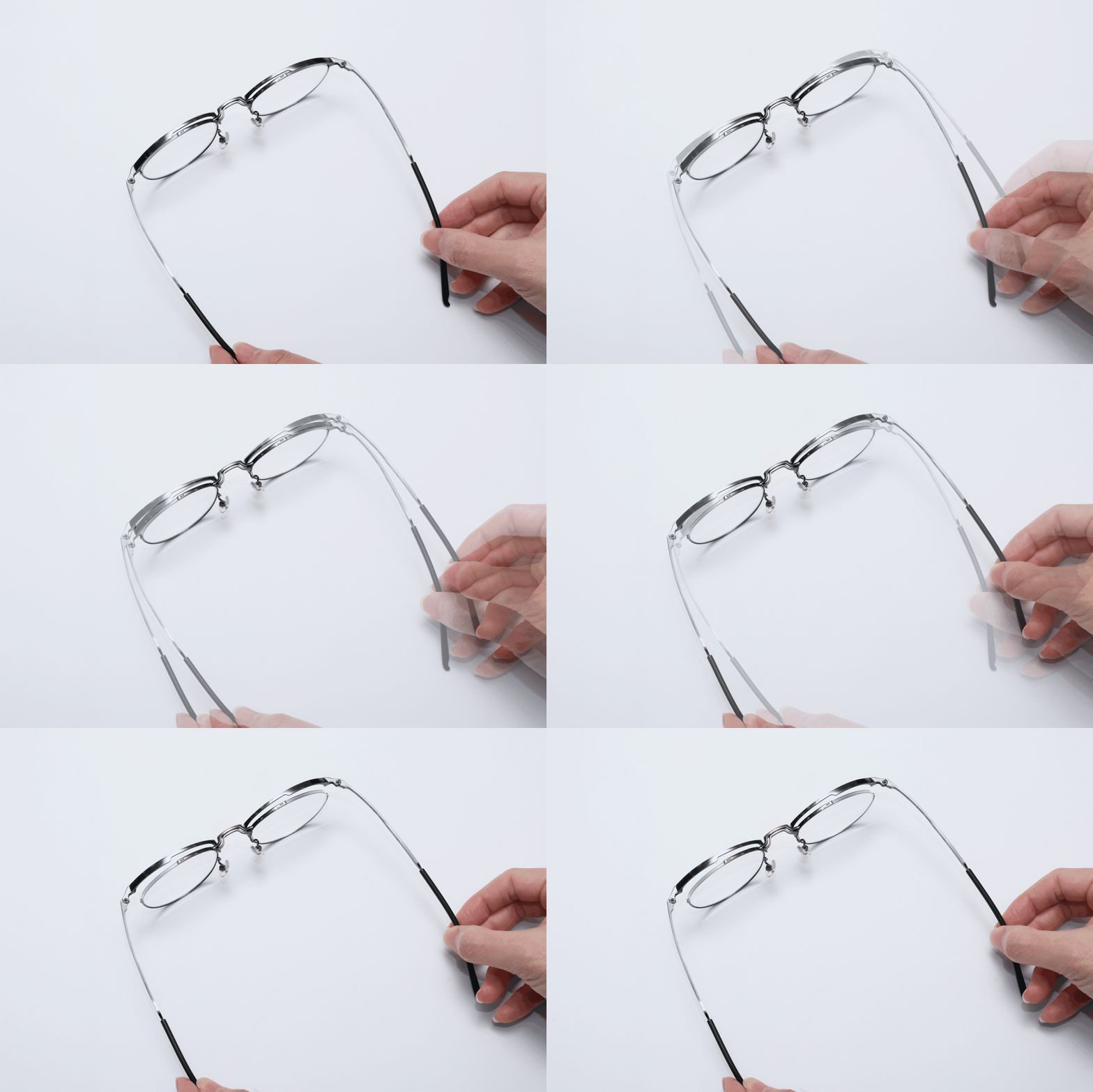
The Layered Brow Structure is a mechanism in which a spring element placed on the inner side of the brow moves to absorb stress. The gently curved spring element is made of β-titanium, a material that combines rigidity with excellent elasticity. The defining feature of this structure lies in how it moves when the glasses are worn. From the brow to the temples, the frame maintains a shape that gently wraps around the head, while only the spring element on the inner side is allowed to move. Moreover, because the spring element is positioned at the bridge—the point farthest from the temple tips — even small movement of the spring results in a significant outward expansion of the temples. As only minimal movement is required, the load placed on the spring component is also reduced. This mechanism allows the easy-to-wear shape of the frame to be maintained over time.
Layered Bridge
The Layered Bridge Structure consists of two bridges arranged in overlapping layers, one in front of the other. The front bridge (face bridge) connects to the rims and independently secures the lenses. The rear bridge (inner bridge), on the other hand, is brazed to the brow parts and the face front, and extends from there to the temples. This inner bridge functions as the spring element. As the inner bridge moves, stress is absorbed while the overall shape from the front of the frame to the temples is maintained. In addition, because the lenses are fixed by the face bridge, they are not affected by this load.
Double Front Structure — A Dual Design That Protects the Lenses
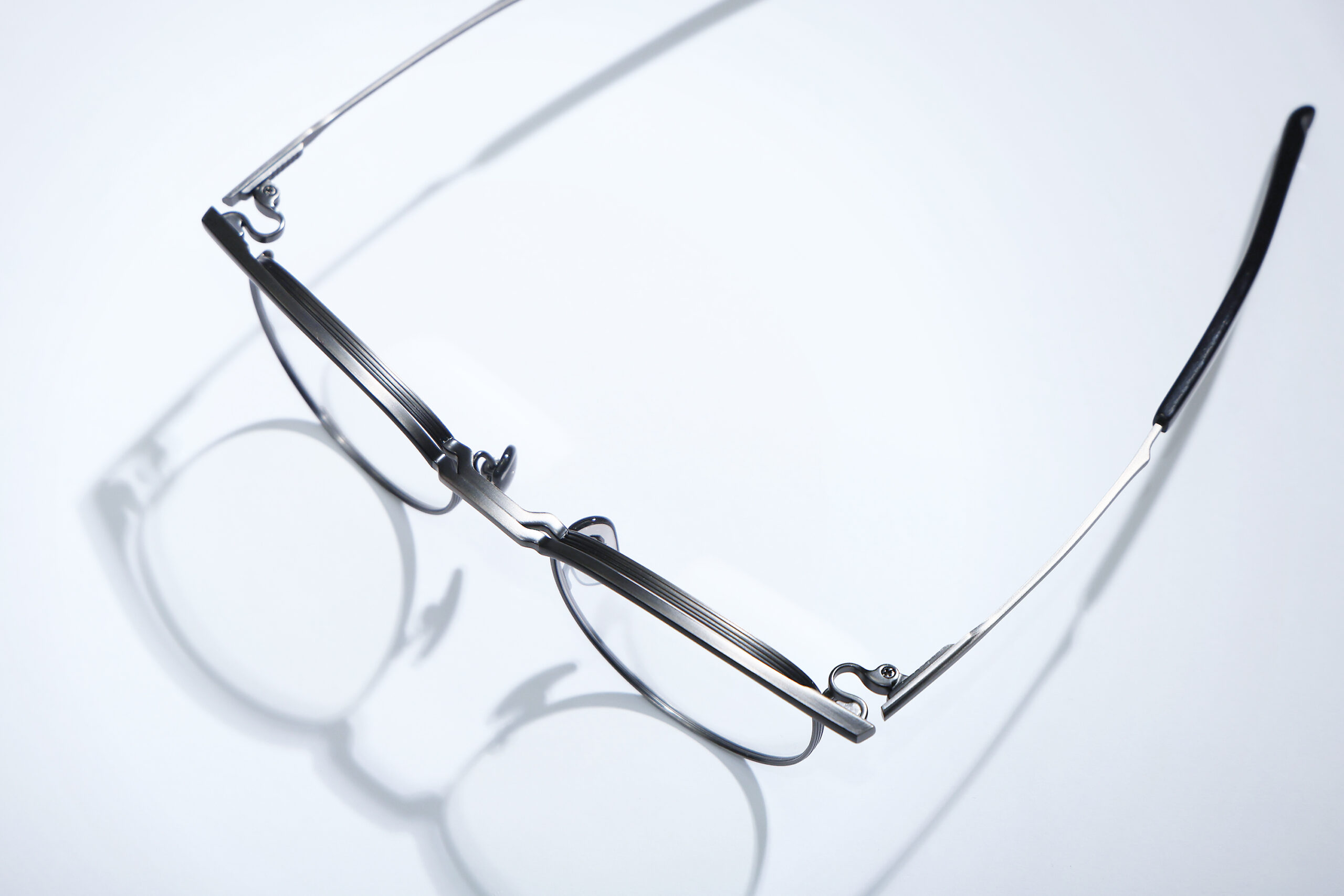
The front of a frame is the “face” of eyewear, and its primary role is to support the lenses.
Lenses come in a wide range of designs and types, and even the same lens will differ in curvature depending on its prescription. Today, aspherical lenses are most commonly used, but in general, with myopic lenses, the stronger the prescription, the flatter the lens curvature becomes. When this curvature exceeds the frame’s basic settings and approaches a flatter shape, the front holding the lens also becomes increasingly flat. As a result, a growing mismatch develops between the frame and the naturally rounded shape of the head. This not only affects visual performance, but also makes the lens itself more difficult to fit. The Double Front Structure was developed to address this issue.
As the name suggests, the Double Front Structure consists of two fronts: the inner front, which secures the lenses, and the face front, which defines the design of the frame. In other words, the roles are divided between the inner and outer structures.
By assembling the lenses and the frame as independent components, two key advantages are achieved. First, forces applied to the frame during wear are less likely to be transmitted to the lenses, helping to prevent distortion and damage. Second, this structure allows for flexible accommodation of a wide range of lens curvatures.
Originally developed as the optimal solution for metal brow frames, the Double Front Structure is now also used in plastic frames. The idea of protecting the lenses—this underlying philosophy—has been carried forward into every Four Nines model.
Nose Pads — Designed to Follow the Low Nasal Bridge
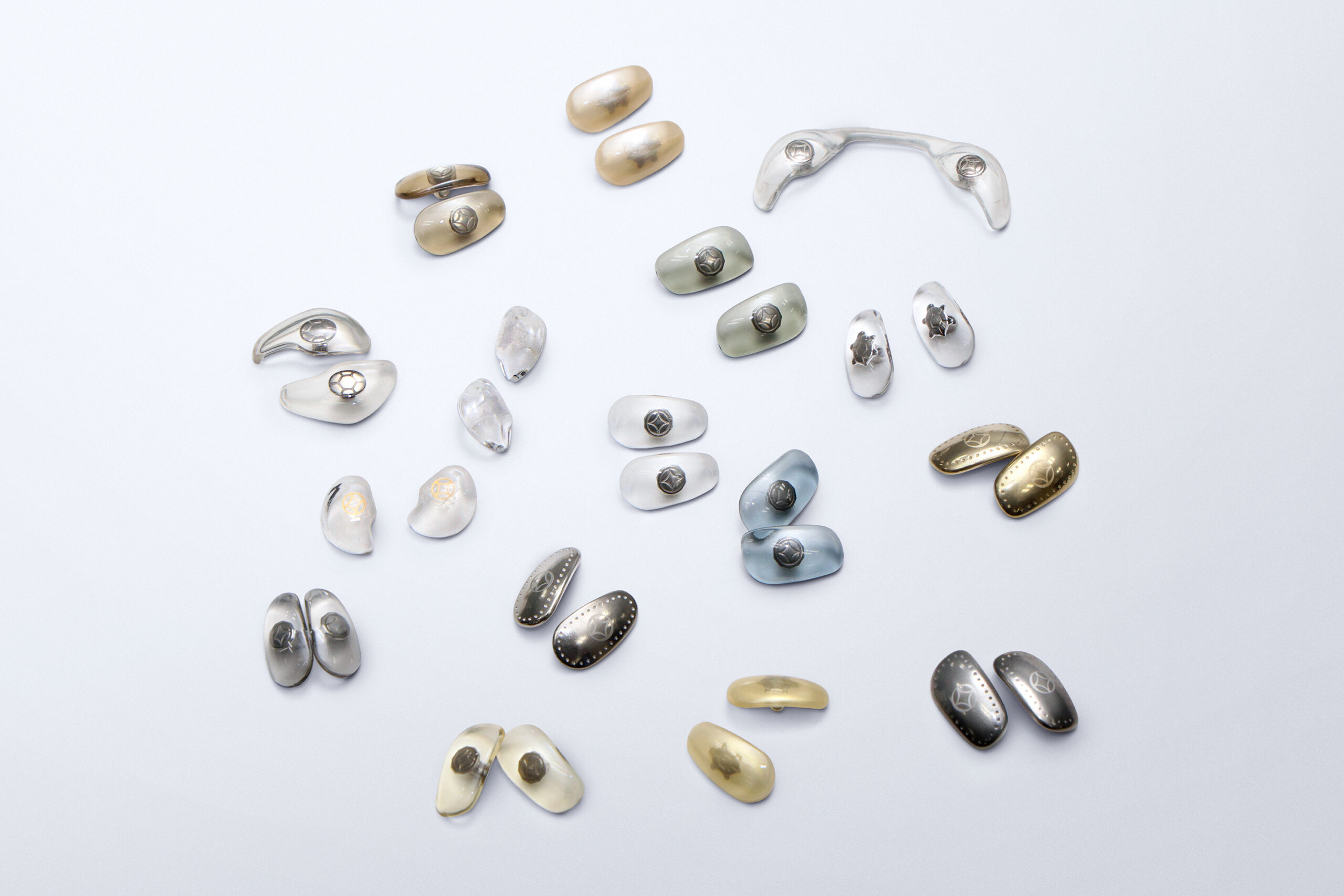
Nose pads are small components that support the glasses and prevent them from slipping. In eyewear, where only two points—the nose pads and the temple tips—come into direct contact with the face, their role is extremely important. Yet despite this importance, nose pads have long received little attention in conventional eyewear design. Even when clear marks were left on the nose, they were often accepted as “just the way glasses are.
In order to challenge conventional assumptions about eyewear, Four Nines reexamined glasses from the perspective of overall balance. The aim was to move away from the traditional idea of sharply bending the temple tips to hook over the ears, while relying on the nose pads to support and secure the frame. Instead, the question became whether the key lay in ensuring proper contact with the face. With stable contact, the load would be more evenly distributed and reduced. It was from this thinking that the development of Four Nines’ original nose pads began.
The Evolving Shape of Nose Pads
When Four Nines was founded in 1995, its nose pads had the standard flat shape. However, when one actually touches the nose, it becomes clear that there are no perfectly flat areas. Pressing a flat surface against a curved one results in contact only around the edges or at a single point. By giving the pad gentle curves both vertically and horizontally, the contact area is increased, allowing the frame to rest on the bridge of the nose not at a point, but across the surface. This approach led to the development of the Round (spherical) Pad.
Next came the Curved (contoured) Pad. By incorporating a variety of curves into a single pad, it was designed so that some part of the pad would naturally fit the bridge of any nose. In addition, there is a smaller version with more pronounced curvature developed specifically for ladies. As ladies’ nose bridges are often narrower and lower than men’s, this design allows sufficient distance to be maintained between the lenses and the face. The pad core is clear, and it is secured to the pad arms using transparent resin pins, ensuring that it remains as unobtrusive as possible when worn.
The Twin Pad was originally developed for children’s frames. Running, falling, bumping into things, jumping, lying down, even getting into scuffles—compared to eyewear for adults, a far higher level of safety and durability is required. For this reason, the pads are made of silicone, with the left and right pads connected so they act as a cushion when sudden impact is applied. Today, with adjustments to size and materials, the Twin Pad is also offered as an option for adults, suitable for use in active situations. In addition, rubber nose pads are available for sports use. With titanium core inside, they can be worn comfortably for everyday use and manually adjusted to achieve a more secure fit when engaging in sports.
The base shapes consist of three types: round, curved, and the more recently introduced square. Compared to conventional pads, the Square Pad offers a larger contact area. In addition, with size variations for men, ladies, and children, as well as a range of colors, there are several dozen possible variations. As nose shapes vary greatly from person to person, Four Nines may also recommend changing the pad shape during fitting to better suit the individual face and ensure greater comfort.
Nose Pad Arms — A Functional Component That Determines Visual Alignment
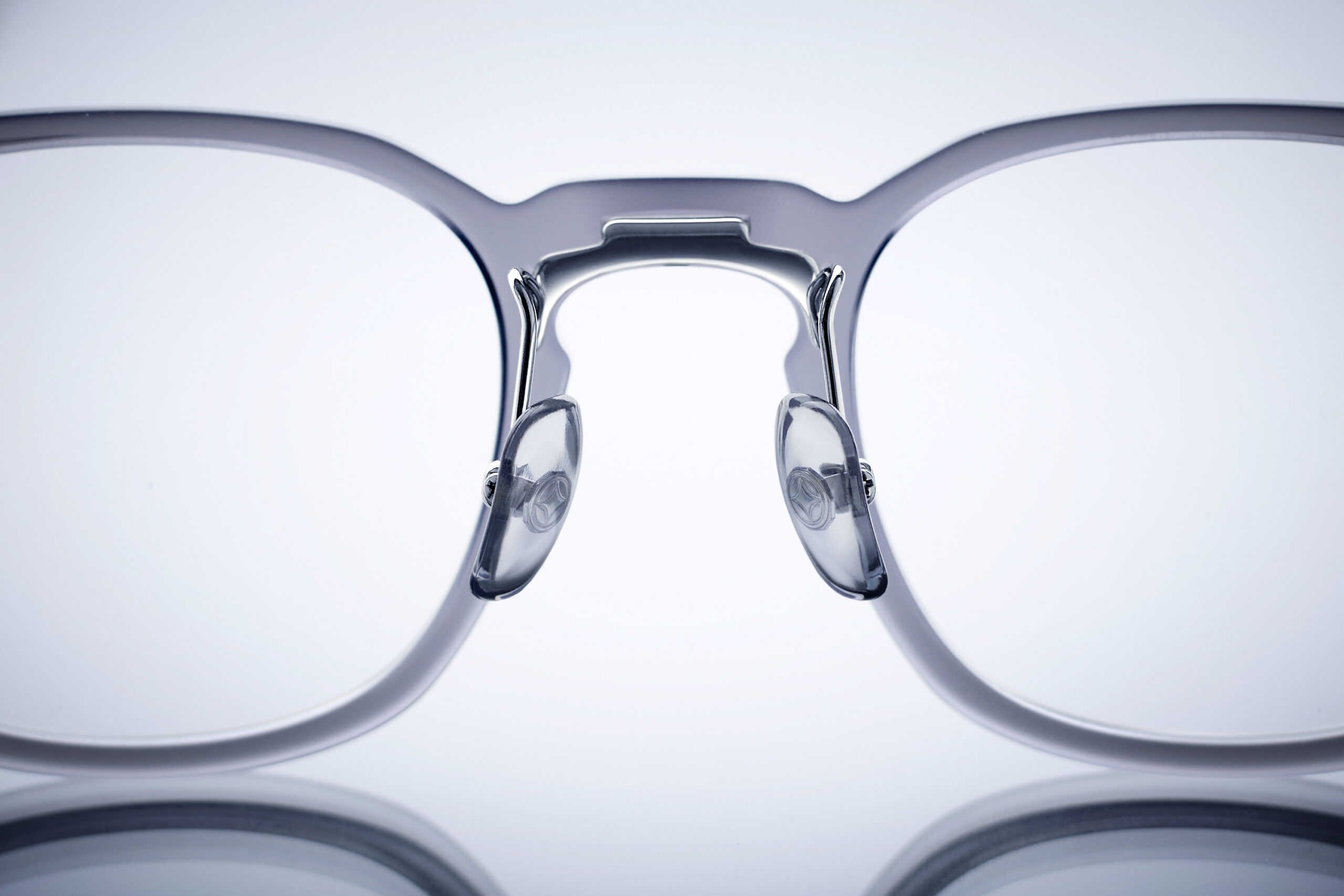
Pad arms are the components that connect the frame and the nose pads, allowing adjustments to height and fit. Regardless of the frame design, pad arms play crucial role in maintaining the correct position of the eyes relative to the lenses (eye point).
The Evolution of Pad Arms — From the Snake-Type to the U-Shape
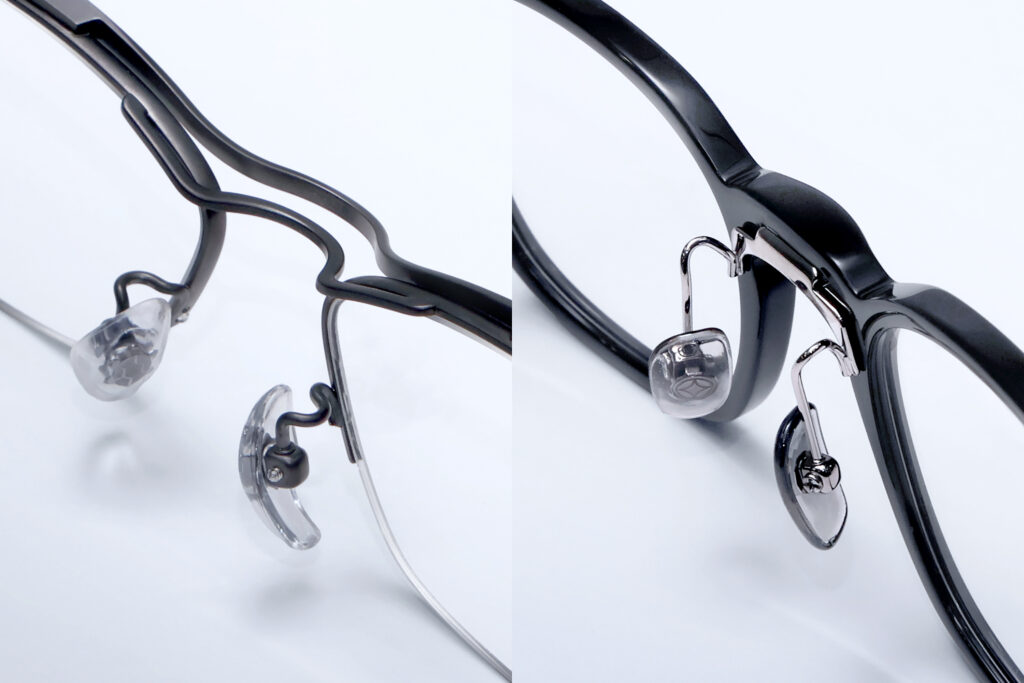
Since its founding, Four Nines has used what is known as the Snake-Type pad arm. This standard type features a gently winding form, reminiscent of a snake. Later, the vertically extended U-Shaped pad arm was developed. By bending the arm while applying a three-dimensional twist to form the U shape, the arm follows the contour of the lens, ensuring that it does not interfere with the appearance of the frame when worn. Today, U-Shaped pad arms are used on nearly all Four Nines models equipped with pad arms.
With metal frames, the position of the pad arms can be adjusted by changing the brazing point. With plastic frames, however, the metal pad arm components are fixed directly to the plastic front, which means the mounting position is constrained by the design. For this reason, Four Nines selects different solutions depending on the concept and design of each frame: slimmer models use a type in which the pad arm is mounted on a base, inserted into the bridge, and secured with screws, while models with greater volume use an embedded type.
A wide range of pad arm lengths is also available. For frames with shallower lens height, such as square shapes, shorter arms are used, while frames with deeper lens heights, such as Boston or Wellington styles, use longer arms. This ensures that the eye point aligns correctly when the glasses are worn. Currently, six types of bases and ten types of pad arms are available, allowing the most suitable combination to be selected for each model.
Temple Tips — For the Few Seconds of Putting Glasses On and Taking Them Off
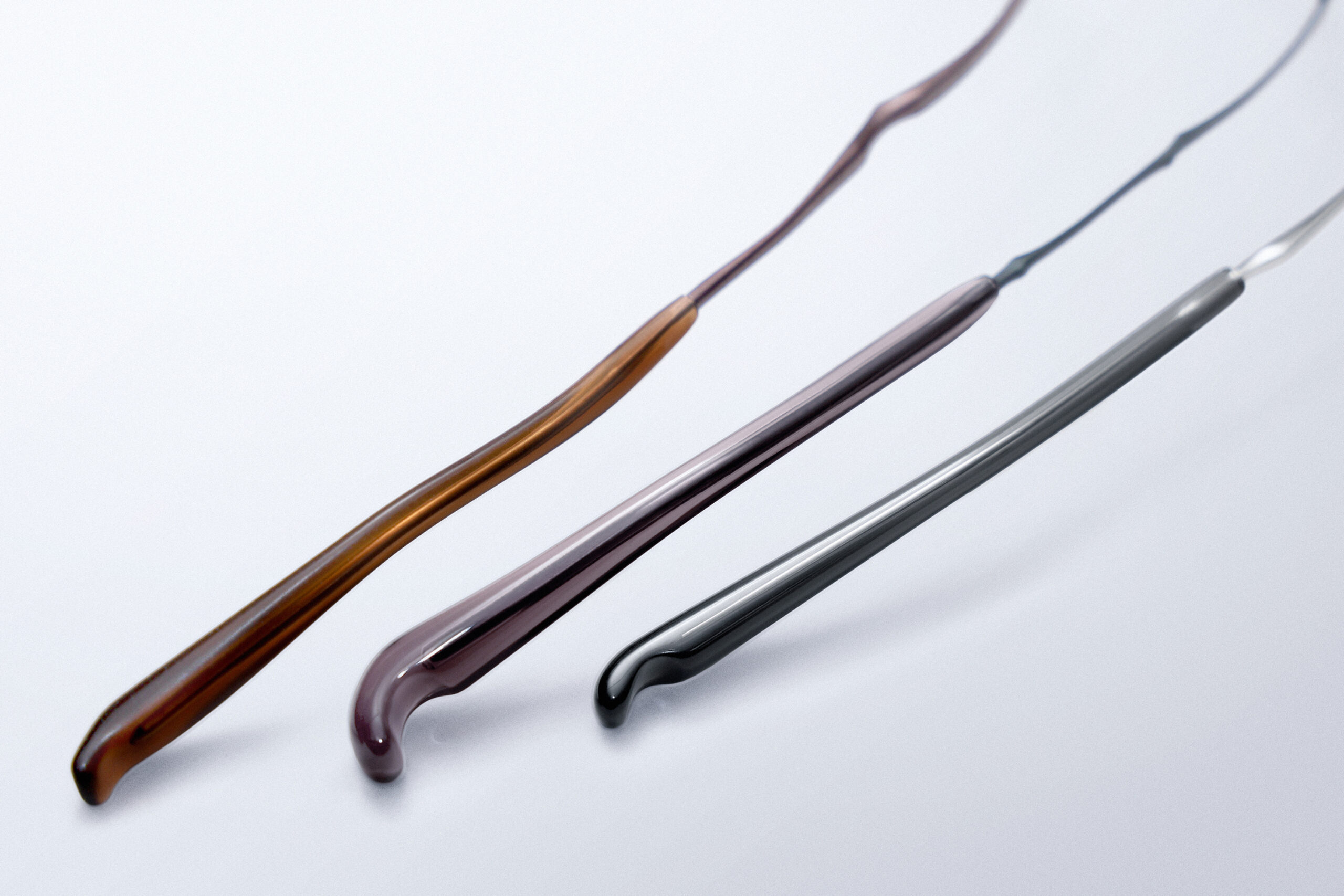
The curved end of the temple is known as the temple tip. It is the first part of the glasses to touch the face when they are put on—in other words, the point where the glasses and the face first meet.
Because Four Nines temples are shaped to follow the contours of the face, the width at the temple tip becomes narrower.
For this reason, the tip is gently flared outward and smoothly rounded, allowing it to slide naturally into place in relation to the width of the face when the glasses are worn. Comfort begins from the very moment the glasses are put on, this is Four Nines’ philosophy.
The distinctive shape, recognizable at a glance, also functions as a brand icon. Since the company’s founding, it has been incorporated into every frame, regardless of material.
Covering the Joint — A Commitment to Invisible Beauty
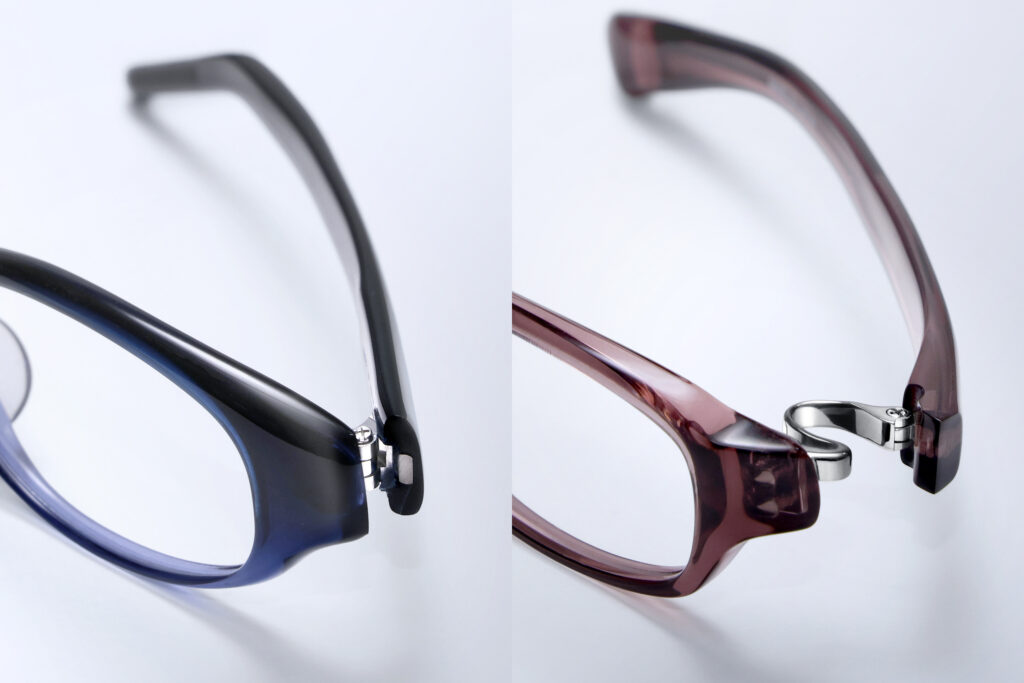
In many Four Nines frames, the plastic temples are designed so that the cross-section of the metal core is not visible at the joint. After the metal core is inserted into the plastic temple, additional plastic is applied over it, sealing it back in place. Over time, plastic gradually shrinks with continued use, while metal, of course, does not. As the surrounding plastic contracts, the metal core can begin to appear as though it is protruding. To prevent this, the core is enclosed in plastic from the outset—this thinking led to the development of this specification. Although this process requires additional time and cost, no effort is spared when it comes to ensuring that eyewear remains both functional and beautiful.
The Philosophy Embedded in Every Component
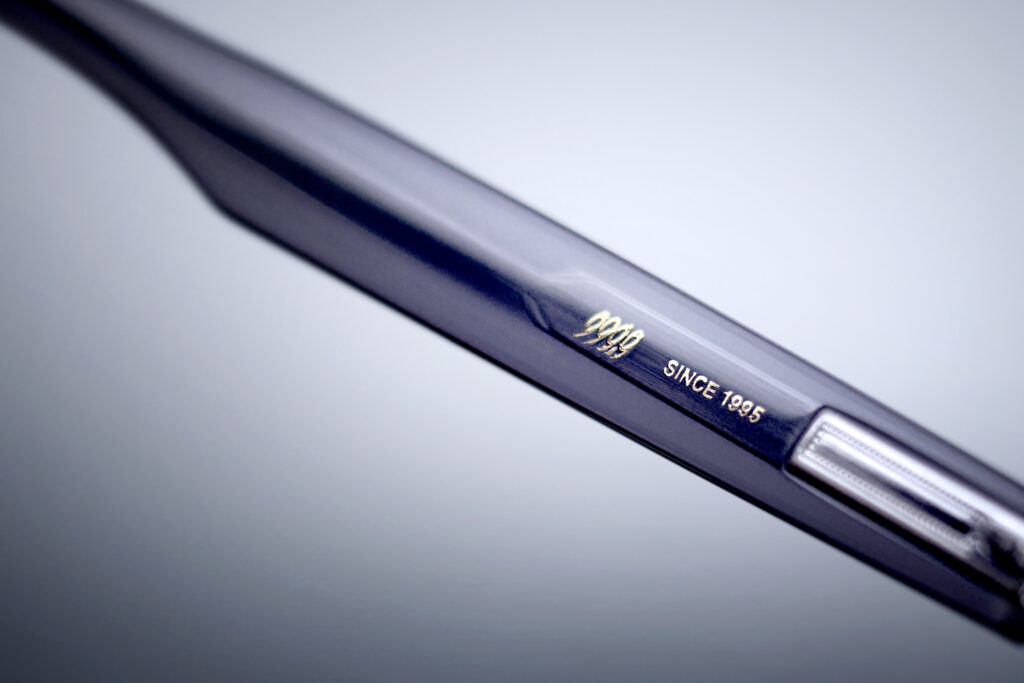
Thirty years since its founding, Four Nines has consistently refined and elevated its commitment to every individual component. Flexible parts, the Double Front Structure, nose pads, pard arms, temple tips, and the covered joint—these details are not merely parts. Each one is imbued with purpose, so that no matter which frame a customer chooses, they can experience the Four Nines philosophy of eyewear that is comfortable, durable, and easy to adjust. This is the essence of the comfort felt from the very moment the glasses are put on.
The “highest purity” pursued by Four Nines does not apply only to its products. In the next installment, we will explore Four Nines’ approach to hospitality.
Related articles
vol.1 999.9(Four Nines) The Beginning of an Endless Pursuit
vol.2 Unprecedented Comfort: The Birth of the Gyaku-R Hinge
vol.3 Attention to Detail. Everything for Comfort
vol.4 What Makes a “Good Pair of Glasses” — Three Elements That Make It Possible
vol.5 What Glasses Bring Together