
1995년「안경은 도구다」라는 컨셉트로 하나의 안경 브랜드가 탄생했다.
매장에서 많은 경험을 쌓아 안경을 숙지한 유지가 모여 시작한 브랜드 “999.9(포나인즈)”
최대한 순도 높은 제조를 목표로하는 그 이름에는, 끝없는 탐구에 대한 각오가 담겨있다.
「일본인 머리 모양에 맞는 쓰기 쉬운 안경은 없는 것인가」라는 물음으로부터 시작된 도전은, 이후 일본 안경업계에 혁명을 가져온 것이다.
있을 만한데도 없었던 일본인 골격에 맞는 안경.
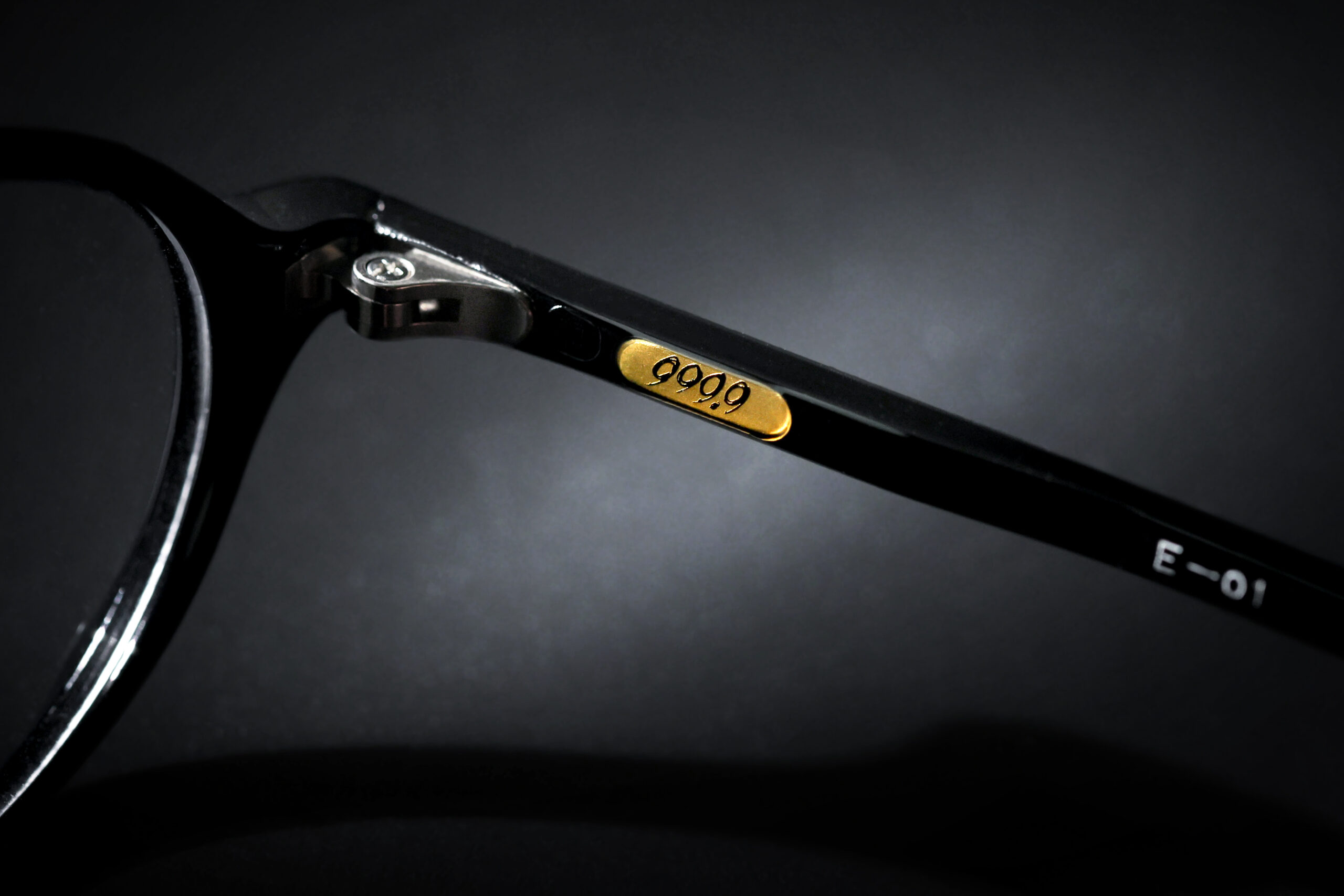
“999.9”는 최고 순도의 순금을 증명하는 숫자다. 그러나 최고 순도라고 해도 1,000/1,000에 도달하기에는 0.1부족한다. 브랜드명의 “999.9(포나인즈)”는 1,000/1,000에 모자란 나머지 0.1을 계속 추구하는 자세를 표현하고 있다.
아무리 좋은 안경을 만들었다 해도 거기서 끝이 아니다. 현재 상황에 만족하지 않고 항상
퀄리티 향상에 노력함으로써 브랜드 성장을 계속할 것이라고 강한 의지를 담았다.
「처음부터 일본인 골격에 맞는 안경이 있으면 좋겠는데…」
탄생의 계기는 현장에서 느껴 있던 소박한, 그러나 절실한 의문이었다.
당시에는 의류뿐만 아니라 안경에서도 해외 슈퍼 브랜드가 시장을 석권했었다.하지만 그 안경들은 당연히 얼굴 폭이 좁고 깊이가 있는 서양인의 골격을 전제로 설계되어 있었다.
없다면 우리가 만들 수밖에 없다. 포나인즈의 역사는 그렇게 시작되었다.
“안경은 견딤”이라는 상식을 깨고 싶다.

Glasses were generally seen as something you wore out of necessity, only when your eyesight declined. It was considered normal to believe that discomfort — such as difficulty wearing them, heaviness, slipping, sore ears, or marks left on the nose — was something you would eventually get used to. Four Nines took a different approach. While functionality as a vision-correction tool was carefully pursued, glasses were designed with comfort in mind.
By introducing a new value standard centered on ease of wear, the image of glasses was transformed from something to be endured into something positive.
For users with diverse skull structures to wear glasses in the optimal position, adjustment (fitting) by skilled opticians is required. However, frames designed for Westerners — with longer skulls and higher nose bridges — do not fit Japanese people, whose skulls tend to be rounder, shorter front to back, and have lower nose bridges, with only minor adjustments. As a result, each pair required individual adjustments relying on the expertise of opticians — modifying nose pads for height or width, or heating the frame to shape it to the wearer’s head. Bending frames at multiple points places stress on them, and the comfort of fit can vary greatly depending on the skill of the individual technician.
Faced with this reality, Four Nines came to a conclusion. By creating glasses that fit the Asian skull from the outset, adjustments could be kept to a minimum, allowing consistently comfortable eyewear to be provided regardless of individual fitting skills.
As the Four Nines brand took shape, the first to resonate with its philosophy were discerning eyewear retailers. Instead of adjusting glasses to each individual face, it was the birth of glasses that already fit from the start. It was an idea that seemed obvious yet had never existed — truly an eye-opening concept.
당시 안경은 “눈이 나빠지면 어쩔 수 없이 쓰는 것”이라는 인식이 일반적이었다. “쓰기에 어려움과 무게, 어긋남, 귀의 아픔, 코에 흔적이 붙는 등의 위화감은 곧 익숙해지는 것”이라는 것이 상식이었던 것이다. 그러나 포나인즈의 도전은 달랐다. 시력교정기구로서의 기능을 추구하면서, 쓰기 쾌적한 안경을 만든다.
“쓰기 쉽다”는 새로운 가치 기준을 만들어 내어 안경의 이미지를 참는 것에서 긍정적인 것으로 바꾸려고 한 것이다.
다양한 골격의 사용자가 최적 위치에서 안경을 사용하기 위해서는, 안경점 기술자에 조정(피팅)이 필요하다. 그러나 두개골이 앞뒤로 길고 콧날이 높은 서양인에 맞게 설계된 해외 프레임은 두개골이 둥글어서 앞뒤로 짧고 콧날이 낮은 일본인에게는 약간의 조정으로는 맞지 않다. 그래서 코 패드를 가공하여 높이를 내거나, 폭을 조정하거나, 프레임을 데워서 머리 모양에 맞추어 조정하거나, 안경점 장인기술에 의지해 하나씩 조정할 필요가 있었던 것이다. 각 사람 얼굴에 맞게 프레임을 여러 번 구부리면 프레임에 부하가 걸리고 장인 개인의 기량에 따라 장착감은 크게 바뀌어 버린다.
그렇다면 포나인스는 생각했다. 원래 일본인의 골격에 맞는 안경을 만들면 조정은 최소한으로 끝나고 개인의 기량에 좌우되지 않고 착용감이 좋은 안경을 고객에게 제공할 수 있을 것이다.For users with diverse skull structures to wear glasses in the optimal position, adjustment (fitting) by skilled opticians is required. However, frames designed for Westerners — with longer skulls and higher nose bridges — do not fit Japanese people, whose skulls tend to be rounder, shorter front to back, and have lower nose bridges, with only minor adjustments. As a result, each pair required individual adjustments relying on the expertise of opticians — modifying nose pads for height or width, or heating the frame to shape it to the wearer’s head. Bending frames at multiple points places stress on them, and the comfort of fit can vary greatly depending on the skill of the individual technician.
Faced with this reality, Four Nines came to a conclusion. By creating glasses that fit the Asian skull from the outset, adjustments could be kept to a minimum, allowing consistently comfortable eyewear to be provided regardless of individual fitting skills.
As the Four Nines brand took shape, the first to resonate with its philosophy were discerning eyewear retailers. Instead of adjusting glasses to each individual face, it was the birth of glasses that already fit from the start. It was an idea that seemed obvious yet had never existed — truly an eye-opening concept.
The Philosophy Embedded in the First Model

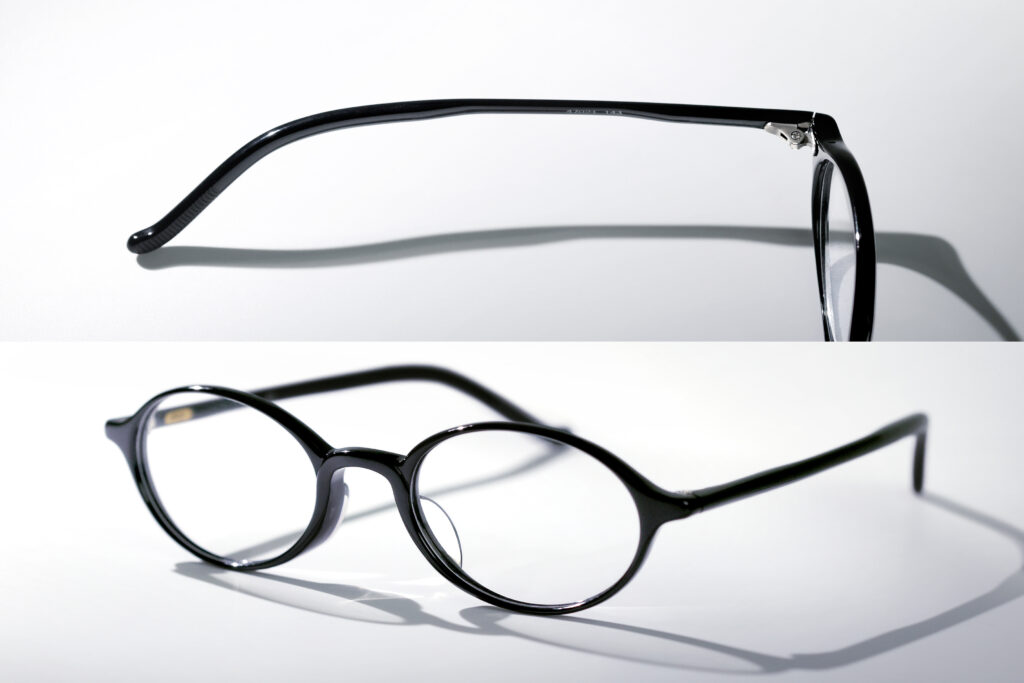
First Model: E-01 (Currently Discontinued)
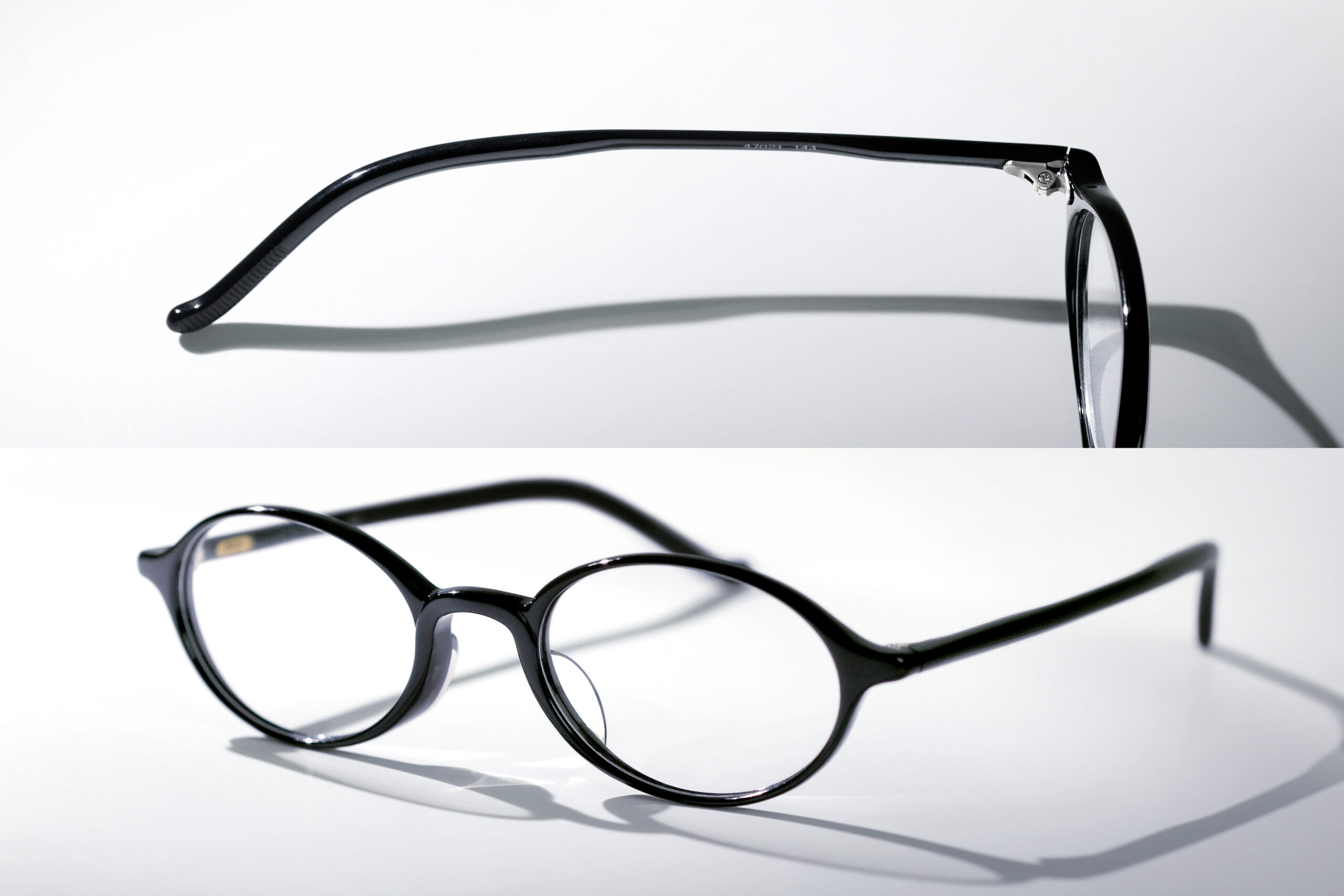
The first models. “E-01” and “E-02,” were finally completed after bringing design drawings to factories in Sabae City, Fukui Prefecture — one of the world’s leading eyewear production centers — and repeating numerous revisions and prototypes. Released in 1995, these two frames were innovative plastic designs that not only fit the Asian skull but also featured varying thickness in the temples. This concept created elasticity in the temples, enhancing the overall fit. In addition, the temple tips were rounded to provide a gentle initial contact when putting the glasses on. These features — the variation in temple thickness and the consideration given to the temple tips — remain part of Four Nines’ core design philosophy even 30 years later.
From the very first model, every aspect — from overall frame form to the smallest design details — embodied the enduring belief that pursuing function naturally gives rise to beautiful form.

From the very first model onward, Four Nines has focused on glasses that are “comfortable,” “durable,” and “easy to adjust.” Glasses are tools for vision correction. That fundamental philosophy remains unchanged to this day.
Then, in 2000 — five years after the brand’s launch — Four Nines introduced a groundbreaking mechanism that would significantly propel the brand forward.
In this Journal series, spread across five parts, we look back on the background of the brand’s birth, key turning points, the passion behind its creation, and the philosophy that hasremained unchanged since its founding. In the next part, we will delve deeper into the “Gyaku R Hinge,” a symbol of the In this Journal series, spread across five parts, we look back on the background of the brand’s birth, key turning points, the passion behind its creation, and the philosophy that has remained unchanged since its founding. In the next part, we will delve deeper into the “Gyaku R Hinge,” a symbol of the brand.
관련 글
vol.1 999.9(포나인즈) 끝없는 탐구의 시작
vol.2 지금까지 없었던 편안함 역R힌지의 탄생
vol.3 디테일에 대한 집념 모든 것은 편안함을 위해
vol.4 “좋은 안경”이란 – 실현하기 위한 3가지 요소
vol.5 하나의 안경이 잇는 것