
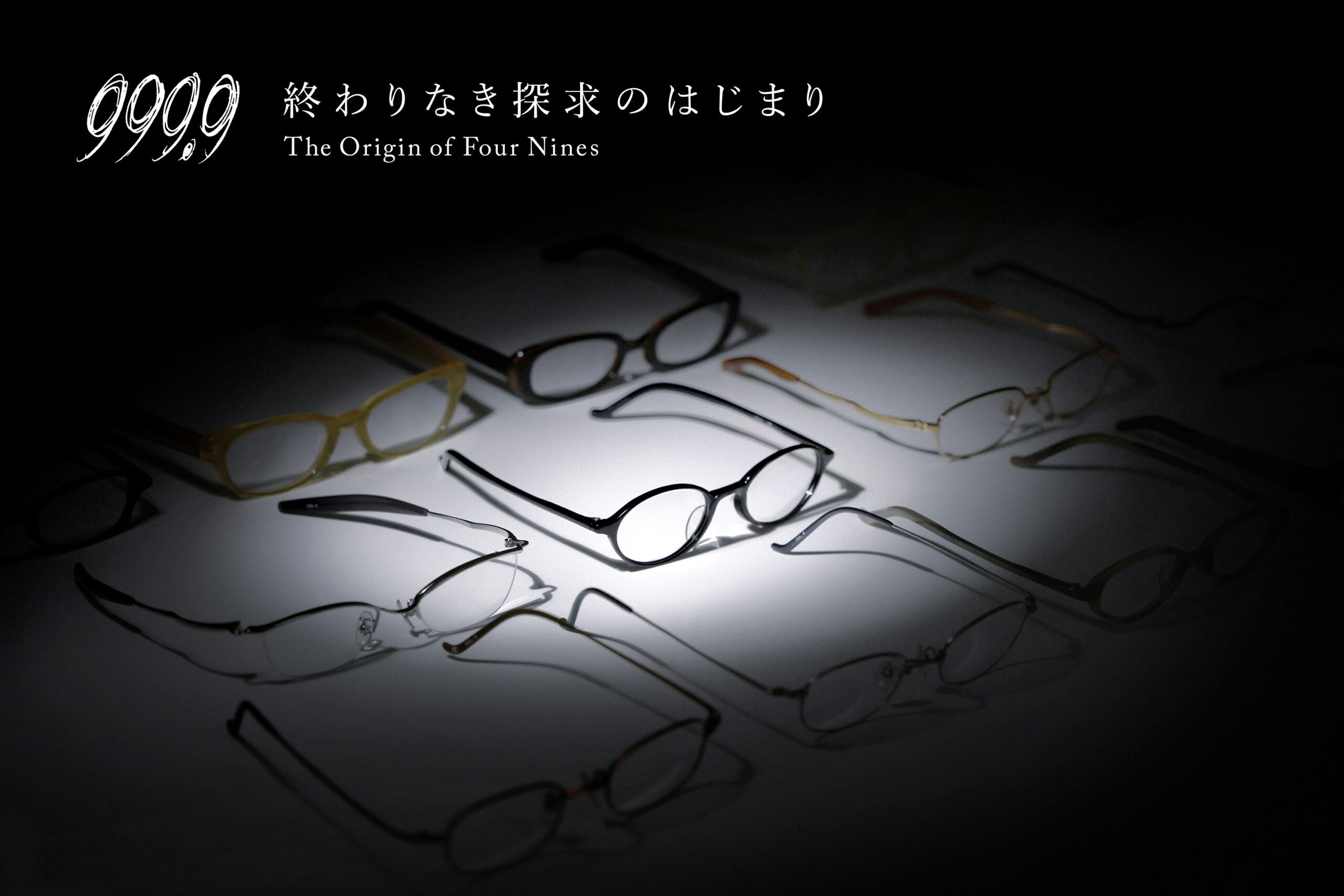
In 1995, an eyewear brand was born with a clear belief at its core: ”Glasses should be fine tools.”
The brand “999.9 (Four Nines)” was founded by a group of professionals with extensive hands-on experience in optical retail and a deep understanding of eyewear.
The name reflects a commitment to creating with the highest possible purity — and a resolve to pursue perfection without end.
The challenge began with a simple question: “Are there no glasses that truly fit the shape of Japanese heads and are comfortable to wear?”— question that would later bring about a revolution in the Japanese eyewear industry.
Glasses That Truly Fit The Asian Skull
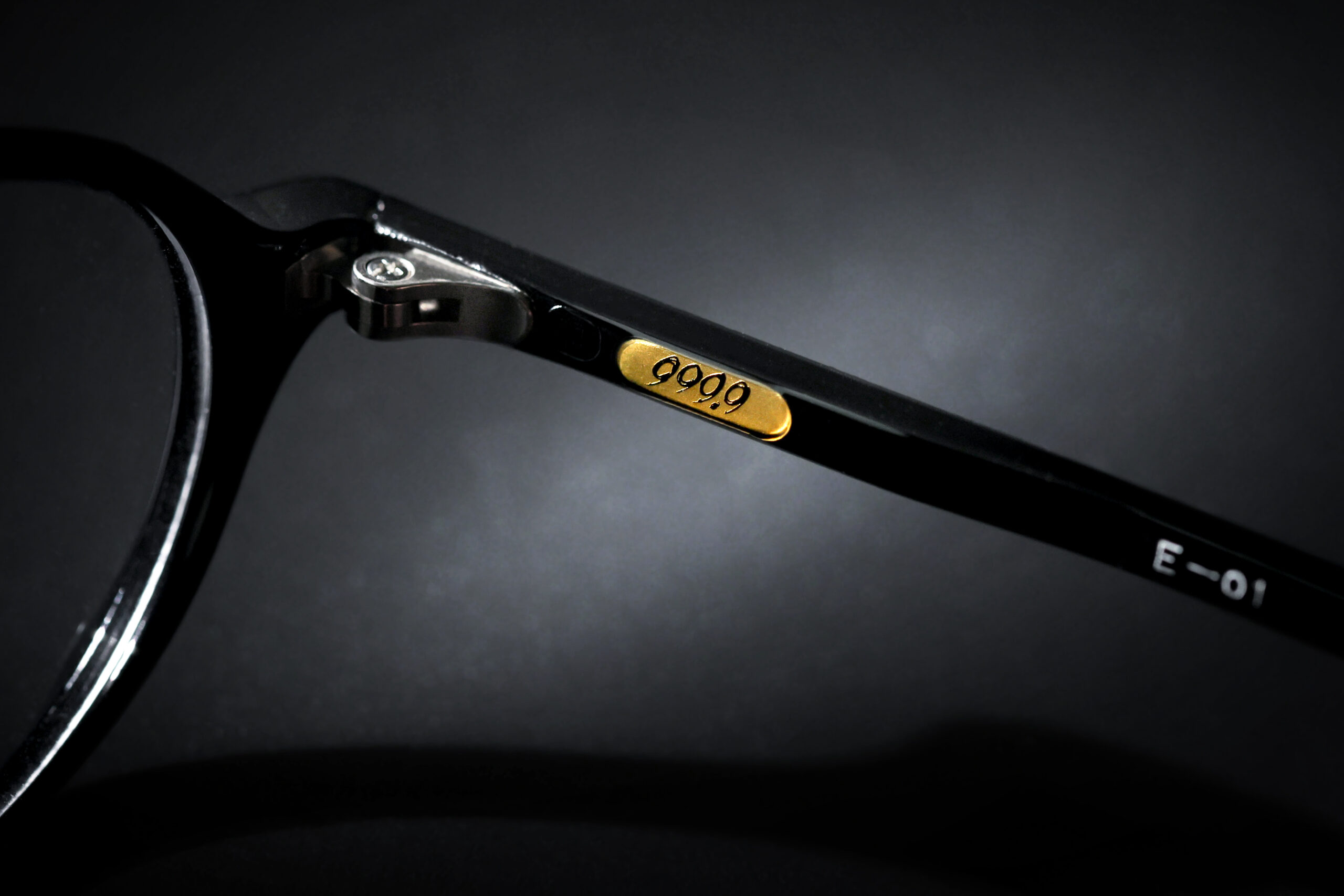
“999.9” is the number that certifies gold of the highest purity. Yet even at its highest purity, 999.9 is still just short of absolute perfection. The name “999.9 (Four Nines)” represents the mindset of continually striving for that remaining 0.1 on the path toward complete perfection. No matter how exceptional a pair of glasses may be, it is never the final answer. It reflects a strong determination to continue growing as a brand by never settling for the status quo and constantly striving to improve quality.
“If only there were glasses that fit the Asian skull right from the very beginning…”
This simple yet pressing question emerged during everyday customer service on the sales floor.
At the time, overseas super brands dominated not only fashion but eyewear as well — and their frames were naturally designed for Western facial structures, with narrower widths and greater depth.
If they didn’t exist, we would have to make them ourselves. That was how the history of Four Nines began.
Breaking The Conventional Belief That “Glasses Are Something You Just Have to Live With”

Glasses were generally seen as something you wore out of necessity, only when your eyesight declined. It was considered normal to believe that discomfort — such as difficulty wearing them, heaviness, slipping, sore ears, or marks left on the nose — was something you would eventually get used to. Four Nines took a different approach. While functionality as a vision-correction tool was carefully pursued, glasses were designed with comfort in mind.
By introducing a new value standard centered on ease of wear, the image of glasses was transformed from something to be endured into something positive.
For users with diverse skull structures to wear glasses in the optimal position, adjustment (fitting) by skilled opticians is required. However, frames designed for Westerners — with longer skulls and higher nose bridges — do not fit Japanese people, whose skulls tend to be rounder, shorter front to back, and have lower nose bridges, with only minor adjustments. As a result, each pair required individual adjustments relying on the expertise of opticians — modifying nose pads for height or width, or heating the frame to shape it to the wearer’s head. Bending frames at multiple points places stress on them, and the comfort of fit can vary greatly depending on the skill of the individual technician.
Faced with this reality, Four Nines came to a conclusion. By creating glasses that fit the Asian skull from the outset, adjustments could be kept to a minimum, allowing consistently comfortable eyewear to be provided regardless of individual fitting skills.
As the Four Nines brand took shape, the first to resonate with its philosophy were discerning eyewear retailers. Instead of adjusting glasses to each individual face, it was the birth of glasses that already fit from the start. It was an idea that seemed obvious yet had never existed — truly an eye-opening concept.
The Philosophy Embedded in the First Model
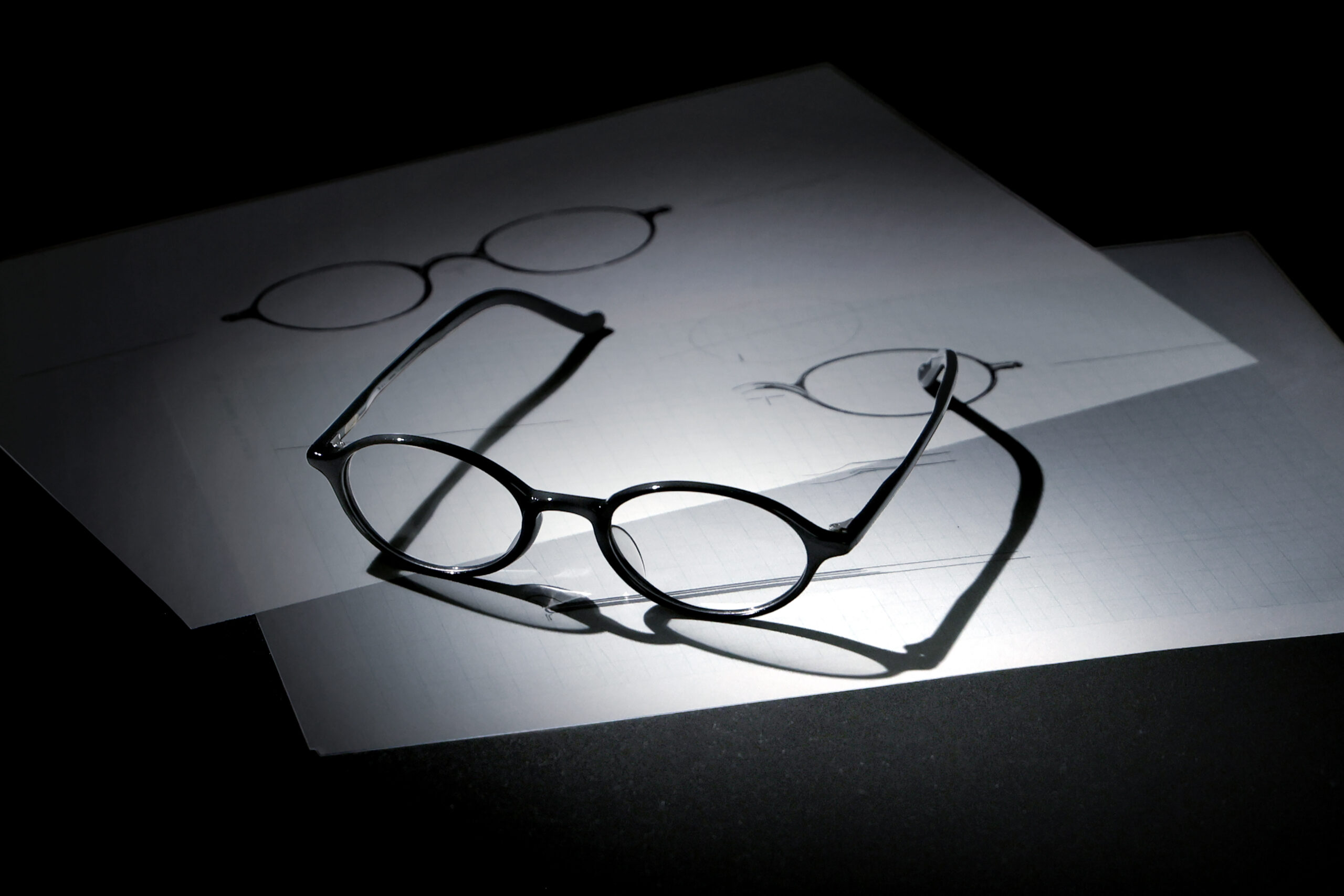
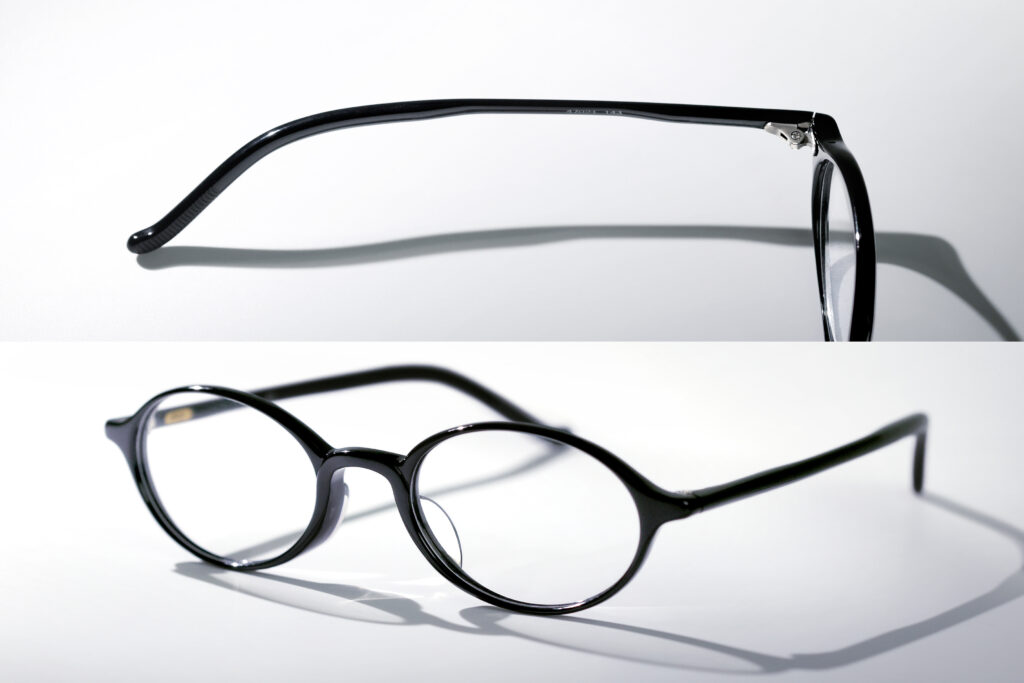
First Model: E-01 (Currently Discontinued)
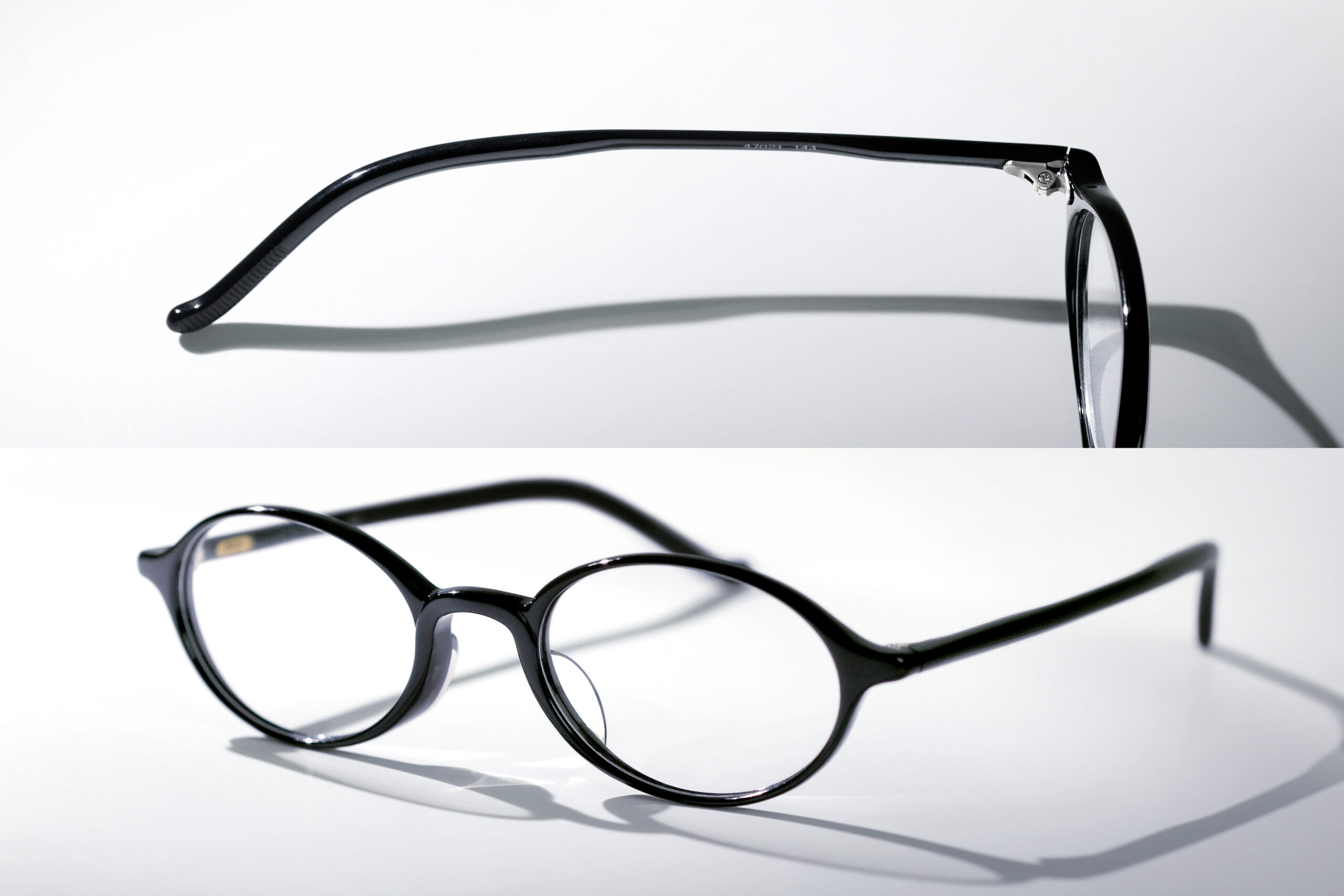
The first models. “E-01” and “E-02,” were finally completed after bringing design drawings to factories in Sabae City, Fukui Prefecture — one of the world’s leading eyewear production centers — and repeating numerous revisions and prototypes. Released in 1995, these two frames were innovative plastic designs that not only fit the Asian skull but also featured varying thickness in the temples. This concept created elasticity in the temples, enhancing the overall fit. In addition, the temple tips were rounded to provide a gentle initial contact when putting the glasses on. These features — the variation in temple thickness and the consideration given to the temple tips — remain part of Four Nines’ core design philosophy even 30 years later.
From the very first model, every aspect — from overall frame form to the smallest design details — embodied the enduring belief that pursuing function naturally gives rise to beautiful form.

From the very first model onward, Four Nines has focused on glasses that are “comfortable,” “durable,” and “easy to adjust.” Glasses are tools for vision correction. That fundamental philosophy remains unchanged to this day.
Then, in 2000 — five years after the brand’s launch — Four Nines introduced a groundbreaking mechanism that would significantly propel the brand forward.
In this Journal series, spread across five parts, we look back on the background of the brand’s birth, key turning points, the passion behind its creation, and the philosophy that hasremained unchanged since its founding. In the next part, we will delve deeper into the “Gyaku R Hinge,” a symbol of the In this Journal series, spread across five parts, we look back on the background of the brand’s birth, key turning points, the passion behind its creation, and the philosophy that has remained unchanged since its founding. In the next part, we will delve deeper into the “Gyaku R Hinge,” a symbol of the brand.
Related articles
vol.1 999.9(Four Nines) The Beginning of an Endless Pursuit
vol.2 Unprecedented Comfort: The Birth of the Gyaku-R Hinge
vol.3 Attention to Detail. Everything for Comfort
vol.4 What Makes a “Good Pair of Glasses” — Three Elements That Make It Possible
vol.5 What Glasses Bring Together